
New PayID Pokies in Australia: Payments Explained
 Available in AU
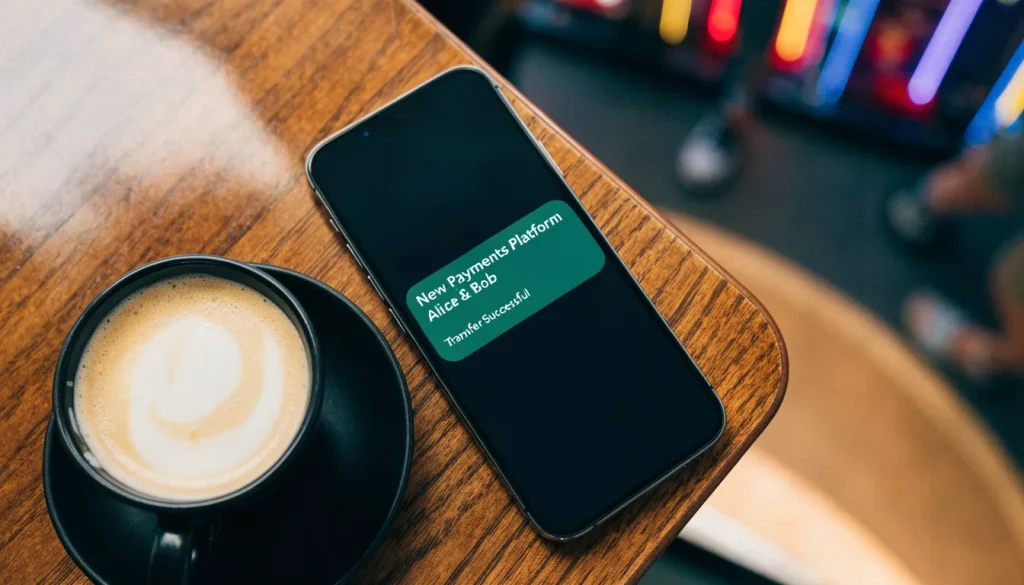
See how PayID transfers work, what banks may affect, and which cashier details and terms to check before a transaction.
Table of Contents
- How PayID Works for Online Pokies Payments
- PayID Withdrawal Timing: Casino Review Comes First
- PayID in Australia: Bank Limits and Possible Blocks
- Before You Use PayID: Match Your Details and Check the Transfer
- What PayID Can—and Cannot—Tell You About a Venue
- Real-Money Payments: Minimums, Fees and Bonus Terms to Check
How PayID Works for Online Pokies Payments
PayID is an Australian payment system that lets a transfer be addressed to an identifier, such as a mobile number or email address, rather than relying on bank account details alone. It operates through the New Payments Platform (NPP), which connects participating banks for quick transfers. In an online cashier, PayID may appear as one of the available payment methods for deposits and, where supported, withdrawals.
There is an important legal context: under the Interactive Gambling Act 2001, operators must not provide real-money online casino games, including pokies, to people physically located in Australia. The payment mechanics described here are general information, not an invitation to use an online casino service.
What happens at the cashier
A cashier is the part of a website where payment methods and transaction instructions are displayed. If PayID is offered, the cashier should identify it clearly and explain the steps relevant to that transaction. The exact layout varies by service, so the cashier page—not an old review or a general description—is the place to check what is currently presented.
If you’re looking for new PayID pokies in Australia for 2026, use this list as a starting point to check each option’s available payment details and licensing information. Confirm PayID availability and terms with the operator before you deposit.
1. Roby Casino
License: Curacao eGaming (Roby Games Ltd) Roby Casino is listed with a Curacao eGaming licence held by Roby Games Ltd. You can use that licensing detail as a starting point when reviewing the operator.
2. Playfina Casino
License: Curacao eGaming (Hollycorn N.V., since 2017) · Min. deposit: A$20-30 (depends on the offer) Playfina Casino is listed under a Curacao eGaming licence held by Hollycorn N.V., with the stated licensing history dating to 2017. Its minimum deposit is A$20–30, depending on the offer.
3. Lucky Dreams
License: Curacao · Min. deposit: A$20 (POLi) Lucky Dreams is listed with a Curacao licence and a A$20 minimum deposit via POLi. The available details do not specify PayID.
4. House of Pokies
License: international iGaming licence – jurisdiction not named in the source · Payout speed: PayID 1-24 hours · Min. deposit: A$30 (PayID from A$10) House of Pokies lists PayID payouts at 1–24 hours and a A$30 minimum deposit, with PayID deposits from A$10. Its licence is described as an international iGaming licence, but the jurisdiction is not named.
5. LuckyVibe
License: Curacao Gaming Control Board OGL/2023/176/0095 (Hollycorn N.V.) LuckyVibe is listed with Curacao Gaming Control Board licence OGL/2023/176/0095, held by Hollycorn N.V. You can check that licence information when considering the operator.
6. Golden Pokies
License: Curacao Golden Pokies is listed with a Curacao licence. The available details are limited to its licensing information.
7. SkyCrown
License: Tobique Gaming Commission · Payout speed: crypto ~10-15 minutes, fiat 1-5 days · Min. deposit: A$30 SkyCrown lists a Tobique Gaming Commission licence and a A$30 minimum deposit. Its stated payout speeds are around 10–15 minutes for crypto and 1–5 days for fiat.
8. JustCasino
License: Curacao Gaming Control Board JustCasino is listed with a Curacao Gaming Control Board licence. The available details provide no further payment or deposit information.
9. Uptown Pokies
License: Curacao (operating since 2017) · Min. deposit: A$20 Uptown Pokies is listed with a Curacao licence and has been operating since 2017. Its stated minimum deposit is A$20.
10. Bizzo Casino
License: Curacao Gaming Control Board (TechSolutions Group N.V.) Bizzo Casino is listed with a Curacao Gaming Control Board licence held by TechSolutions Group N.V. You can use these licensing details as a reference when reviewing the operator.
A typical deposit flow begins with selecting PayID and entering the amount requested by the cashier. The page may then show the PayID identifier and any reference or instructions to use when making the transfer through a bank’s app or online banking. You initiate the payment from your bank; the cashier is where the recipient details and transaction status are shown. The bank’s confirmation and the cashier’s updated balance are separate parts of the process.
PayID deposits at online casinos are typically completed within seconds. That describes the transfer speed, not a promise that every cashier will update at exactly the same moment. A payment can be sent while the website is still displaying an earlier balance, so check the transaction status before trying again. Repeating a transfer simply because a page has not refreshed can create an unwanted duplicate payment.
The cashier should also make clear whether PayID is available for the transaction you are considering. Payment options can differ between deposit and withdrawal screens, and the presence of one method on a general information page does not establish that it is available for every purpose. Read the instructions shown for the specific transaction rather than assuming the process is identical in both directions.
Deposits and withdrawals are separate cashier functions
PayID supports both deposits and withdrawals, with money moving in both directions. A deposit is a transfer from the user’s bank towards the recipient shown in the cashier instructions. A withdrawal is a request made through the cashier to send funds back using a supported payment route. The fact that a method can be used for both does not mean the two actions have identical steps or appear in the same part of an account.
Bitcoin Pokies in Australia: Payments and Risks
For a withdrawal request, the cashier may ask you to choose a payment method and enter an amount before confirming the request. The screen should show whether the request has been submitted and any status the service provides. This is distinct from a bank transfer being initiated: a submitted request is not itself proof that money has reached an account. The internal handling of withdrawals is a separate matter from the basic PayID transfer mechanism.
This difference matters when comparing payment options. A method may be convenient for deposits because the transfer is quick, while the withdrawal route can involve a different process. The useful comparison is not simply whether a site displays the PayID name. Check whether its cashier describes PayID for the particular direction of payment you are reviewing and whether the instructions are clear.
Check before creating an account
Before signing up, inspect the cashier or payment-information page and confirm that PayID is listed. This is the practical check that prevents you from relying on a logo, an outdated description or a general claim that does not match the current payment screen. Look for details that explain how the method is used, which transaction types it covers and where the instructions will appear.
Attention: A payment method’s availability is a feature of the service’s own cashier, not something determined by the payment name alone.
If PayID is not shown, or the page does not explain how it works, do not assume it can be enabled later. A payment method’s availability is a feature of the service’s own cashier, not something determined by the payment name alone. Clear instructions matter more than a broad claim of support.
Treat the cashier as a transaction interface, not as evidence about the service behind it. Seeing PayID there tells you that a payment route is presented; it does not establish the operator’s status, the fairness of games or whether a withdrawal will be paid. Those are different questions, and a payment logo answers none of them.
For a person comparing payment mechanics, the basic distinction is straightforward: PayID provides an identifier-based route through the NPP, the cashier supplies transaction-specific instructions, and the bank is where the transfer is initiated. Deposits are typically completed within seconds, while withdrawals are requested through the cashier as a separate function. Check the relevant cashier page first. Clear beats assumed.
PayID Withdrawal Timing: Casino Review Comes First
A PayID withdrawal has two separate stages: the operator’s handling of your request and the transfer after it is approved. The distinction matters because a payment method can move funds quickly once released without making the overall withdrawal quick. The clock does not necessarily start when you click “withdraw”.
The first stage is internal. A casino may mark a request as pending while it checks the account, verifies withdrawal details or completes other review steps. During that period, the money has not yet left the casino’s system. A specialist review reports that this pending stage may last 24–72 hours, but that is a reported range, not a fixed timetable for every operator. The length and rules of the review can vary.
Real Cash Online Pokies in Australia: Bitcoin Guide
Pending is not the transfer
A pending status means the request has not yet been approved and sent. It should not be read as evidence that PayID itself is taking that long to process the payment. The transfer stage begins after the operator approves the withdrawal and initiates it.
This distinction makes published timing claims easier to assess. If a page gives a single estimate from request to receipt, check whether it includes the casino’s internal review. A figure describing only the transfer after approval cannot tell you how long the full process will take. Conversely, an overall estimate may combine two stages with different causes of delay.
Specialist reviews report that a casino’s pending period can be followed by a PayID transfer taking 12–24 hours after approval. They also report a total request-to-receipt period of 2–4 days when internal processing is included. These are reported timings, not guaranteed service levels: the operator’s review and the status of your account affect the result. Treat the component times separately rather than assuming that one applies to the entire withdrawal.
KYC can add a review step
KYC, or identity verification, can affect how quickly a withdrawal is reviewed. If the casino needs to verify your identity or check information on the account, approval may take longer than it would for a request that has cleared the operator’s checks. The key point is that this happens before the transfer stage; a fast payment rail cannot complete a withdrawal that the casino has not yet approved.
A fast payment rail cannot complete a withdrawal that the casino has not yet approved; KYC verification happens before the transfer stage.
Check the operator’s instructions for the documents it requests and whether your verification status is complete before relying on a withdrawal estimate. If the operator asks for more information, respond through its stated process and keep a record of the request and your reply. Repeatedly submitting a withdrawal request is not a substitute for resolving an outstanding review, and it may make it harder to follow the status of the original request.
Do not confuse “verified” with “paid”. Verification concerns the account review. Approval means the operator has cleared the withdrawal to be sent. A payment that is approved but not yet visible in your account is at a different stage from one still marked pending. When asking for an update, identify which status applies; it helps distinguish a review delay from a transfer delay.
What to check when a withdrawal is delayed
Use the cashier or account history to establish the request time and the current status. Then compare that status with the operator’s stated withdrawal process. If the request remains pending, ask whether the operator is waiting for verification or another review. If it is approved, ask when the PayID transfer was initiated and whether the operator has a transaction reference it can provide.
After approval, PayID transfers are reported in specialist reviews as often reaching the account within the same day. Another reported estimate places the post-approval transfer at 12–24 hours. These descriptions are not a promise that every transfer will arrive within a particular window. They refer to the transfer after the casino has approved it, not the time spent waiting for that decision.
Keep a simple record: request time, status changes, any verification request, approval time and the time the funds appear. This gives you a clearer basis for a support enquiry than a general statement that the withdrawal is late. If the operator gives a different estimate, ask whether it applies to internal review or to the transfer itself. Those are not interchangeable answers.
The relevant comparison is therefore not simply “PayID versus another method”. It is the operator’s review process, your account’s verification status and the transfer time once approved. A new payment option does not remove the casino’s role in deciding when a withdrawal is released. For timing, the approval point is the dividing line. The rest is processing.
Online Pokies with PayID in Australia: Deposits
PayID in Australia: Bank Limits and Possible Blocks
A PayID transfer can be available as a payment method in principle and still be unavailable from your bank in practice. Two bank-side checks matter: the limit your bank sets for transfers and whether the bank permits a payment to the intended recipient. Neither is controlled by the payment name alone.
A specialist payment review reports that a player’s bank sets the daily PayID transfer limit. Treat that as a bank-specific setting, not a standard Australian allowance. The amount you can send may depend on the limit attached to your own account and the bank’s current terms. Check those details directly with your bank before relying on PayID for any payment. A figure shown in another person’s account or in an old review does not establish the limit that applies to you.
This distinction is useful when comparing payment options: the relevant criterion is not simply whether PayID is mentioned, but whether your bank will permit the transfer and whether your account limit accommodates it. A payment method can be listed by a recipient while your bank’s settings still prevent you from sending the intended amount. The bank sets the boundary.
Aristocrat Online Pokies in Australia: What’s Known
A transfer may be blocked
Some Australian banks may block PayID transfers to recipients they identify as gambling merchants. A specialist review has reported occasional blocks under banks’ acceptable use policies, including at some of the country’s largest banks. That report is not evidence that every bank blocks such payments, or that a particular bank will treat every transfer the same way. Bank policies and their application can change.
A declined or unavailable transfer is therefore not automatically proof of a PayID-wide outage. The restriction may be bank-side, and the bank is the appropriate place to confirm its current policy. Do not assume that changing the payment description or trying a different route will make a blocked payment acceptable. A bank restriction is a decision to respect, not a technical puzzle to bypass.
For a practical comparison, keep the questions separate:
| Check | What it tells you |
|---|---|
| Your account’s daily PayID limit | The maximum your bank permits you to transfer under that setting |
| Your bank’s current acceptable use policy | Whether the bank permits the type of payment |
| The recipient’s payment instructions | Whether PayID is presented as an available method |
A positive answer in one row does not settle the others. In particular, a recipient listing PayID does not override your bank’s limit or policy.
Australian legal context matters
Bank acceptance should not be mistaken for legal approval of an online casino. Under the Interactive Gambling Act 2001, it is illegal for operators to provide real-money online casino games, including pokies, to people physically located in Australia. The law treats online casino-style games as prohibited interactive gambling services when they are provided to customers in Australia.
That context is separate from a bank’s payment decision. A transfer that goes through does not establish that the recipient is authorised to provide the service, and a blocked transfer does not provide a complete explanation of the law. PayID is a payment system; its availability says nothing about whether the underlying service may lawfully be offered to Australian customers.
The distinction is easy to miss because payment screens describe mechanics, not the legal status of a service. A bank may permit a payment for reasons unrelated to the legality of the recipient’s business. Equally, a bank may restrict a payment under its own terms. Neither result should be treated as a verdict on the other question.
Legal Notice
Under the Interactive Gambling Act 2001, it is illegal for operators to provide real-money online casino games, including pokies, to people physically located in Australia.
What to do before relying on PayID
Start with your own bank’s information, rather than a general claim about Australian banks. Confirm the daily transfer limit that applies to your account and ask whether the bank permits the relevant kind of payment. If the bank’s answer is unclear, seek clarification from the bank before making a decision. Policies can vary, and a third-party summary may not reflect a current account-specific rule.
If your bank says a transfer is restricted, do not try to disguise the recipient or route the payment around the restriction. That can create further account or payment problems, and it does not change the legal context. If your bank permits PayID transfers generally, that still does not mean every recipient or payment will be accepted.
The most reliable comparison is therefore specific, not broad: your bank’s current limit, its current policy, and the nature of the recipient. “PayID accepted” is not a complete answer. It is only one part of the payment picture.
Before You Use PayID: Match Your Details and Check the Transfer
A PayID payment has two separate identity checks to keep straight: the PayID registered with your bank and the name on the account profile associated with the payment. If those details do not line up, a payment may not be credited as expected, and a later withdrawal may be harder to resolve. Before entering any payment information, compare the details carefully rather than assuming that similar names or a familiar email address are close enough.
Your PayID is the identifier linked to your bank account, such as a mobile number or email address. The payment should be made using the PayID registered with your bank. Separately, the bank account name should match the name on the casino profile. Treat both checks as important: matching the identifier to your bank does not, by itself, confirm that the profile name is correct.
Do
- Use the PayID registered with your bank
- Ensure the bank account name matches the profile name
- Review recipient details before authorising
Don’t
- Use another person’s PayID or bank account
- Assume similar names are sufficient
- Confirm a transfer without verifying details
Check the details before authorising
Before confirming a transfer, pause and compare the information displayed in your banking app with the details you intended to use. Check that the selected PayID is the one registered to your bank account and that the recipient details shown are consistent with the payment you mean to make. If something looks unfamiliar or does not match, do not proceed until you have clarified the discrepancy through an appropriate channel.
Take the same care with your account profile. Use your own details, entered accurately, and make sure the account name corresponds to the bank account you intend to use. Small differences can matter when a payment needs to be identified or when an account is checked before a withdrawal. Avoid using another person’s PayID or bank account to get around a mismatch; that creates a further gap between the person making the payment and the profile attached to it.
A quick comparison is more useful than relying on memory:
| Check | What to compare |
|---|---|
| PayID | The identifier selected for the transfer and the PayID registered with your bank |
| Account name | The bank account holder’s name and the name on the profile |
| Recipient details | The recipient information displayed before you confirm |
This is a basic consistency check, not a guarantee that a payment will be accepted or that a withdrawal will be approved. It simply reduces avoidable confusion about who sent the money and which account it relates to.
Treat confirmation as the point of no return
PayID transactions are irreversible once confirmed. That makes the final confirmation screen a decision point, not a formality. Read the recipient information and payment details before authorising the transfer. If you notice an error after confirmation, do not assume that the payment can be cancelled or recalled through PayID.
Keep the confirmation or transaction record for your own records. If a payment is not reflected as expected, having the transfer details available can help you explain what happened when seeking assistance from the relevant payment provider or service. A record does not reverse the transaction, but it gives you a clear account of what you authorised.
Do not send a second payment simply because the first one has not appeared where expected. First establish whether the original transfer was confirmed and what its status is. Repeating a payment without checking can leave you with two completed transfers instead of one. The key distinction is straightforward: before confirmation, you can stop and reconsider; after confirmation, you should treat the transfer as final.
If the names do not match
Stop before sending money if the PayID is not registered to your bank account, or if the bank account name differs from the name on the profile. Do not try a series of small changes to see what will pass. Correct the underlying details first, using the relevant account or bank process, then compare them again.
Pay by Phone Casinos in Australia: Payment Guide
If you have already confirmed a transfer with incorrect details, gather the transaction record and contact the relevant support channel promptly. Describe the mismatch plainly and provide the information requested through a secure channel. Do not share banking passwords, one-time security codes or other credentials to prove who you are.
There is a wider legal point for anyone in Australia: the Interactive Gambling Act 2001 prohibits operators from providing real-money online casino games to people physically located in the country. Payment precautions do not change that position. They also do not establish that a recipient or service is lawful, reliable or willing to return funds.
The practical rule is simple: match the PayID to your bank, match the account name to the profile, and review the recipient details before confirming. Once confirmed, the transfer is final.
What PayID Can—and Cannot—Tell You About a Venue
PayID can tell you something specific about the payment route: it lets a sender use an identifier, such as a mobile number or email address, rather than entering conventional bank account details. In Australia, it operates through the New Payments Platform (NPP), which supports quick transfers between banks. That is useful information when assessing how a payment may be addressed and moved. It is not a verdict on the business receiving it.
The distinction matters when you encounter a venue presenting PayID as a sign of quality. The payment method has practical features of its own, but those features do not certify the venue. A transfer can be quick without the recipient being trustworthy. An identifier can make the intended recipient easier to recognise without proving that the recipient is entitled to provide a particular service. The payment rail and the operator are separate things.
Safe Online Pokies in Australia: Bitcoin Risks
| PayID can indicate | PayID cannot establish |
|---|---|
| The payment uses an identifier such as a phone number or email address | That the venue is licensed or legally allowed to serve you |
| The transfer is made through the NPP | That the venue is honest, fair or transparent |
| PayID itself does not impose a transfer fee | That the venue will pay winnings or resolve a complaint properly |
The identifier is a payment detail, not a credential
Using a mobile number or email address can make a recipient identifier more familiar than a string of account details. That helps describe how PayID works, but familiarity should not be mistaken for verification. The identifier is part of the transfer process; it does not independently authenticate every claim made by the business displaying it.
A venue may show payment instructions that include a PayID identifier. That fact alone does not tell you who controls the destination, what rules govern the service, or what protections apply to you. Nor does the presence of PayID prove that a site’s descriptions of games, account handling or payouts are accurate. Those are separate claims and need separate evidence.
This is a useful test for promotional language: ask whether a statement concerns PayID’s payment function or makes a broader claim about the venue. “Transfers use an email address” describes a payment feature. “PayID means this venue is safe” does not follow from that feature. The first is about the method; the second tries to make the method stand in for an assessment it cannot provide.
NPP connection explains the route, not the recipient
PayID’s connection to the New Payments Platform explains why it can support quick transfers between banks. It places PayID within an Australian payment system, rather than making it a special quality mark awarded to an online operator. The NPP connection is relevant to the movement of funds, not to whether an online pokies service is lawful or dependable.
That distinction is especially important in Australia. Under the Interactive Gambling Act 2001, providing real-money online casino games—including pokies—to people physically located in Australia is illegal for operators. PayID’s availability does not change that legal position. A payment option cannot make a prohibited service lawful, and its use should not be read as evidence that a venue has Australian authorisation.
Best Paying Online Pokies Australia: Assessing Claims
Accordingly, describing a site as a “PayID venue” says little about its status. It identifies a payment method the site says it accepts. It does not resolve whether the underlying service may be offered to Australian customers. A payment label is not a licence.
No PayID transfer fee is not the same as no cost
PayID itself does not charge a transfer fee. Reputable venues also do not add a separate charge for PayID deposits or withdrawals. Those points can help you distinguish the payment system’s own pricing from any charge a venue might set under its terms. They do not mean every transaction connected with a venue is cost-free, nor do they guarantee that the venue’s conditions are favourable.
Keep the scope precise: “PayID does not charge a transfer fee” is a statement about PayID. It is not a promise about every operator’s account rules or the total cost of using a service. If a venue makes a broader claim about charges, assess that claim in its own terms rather than treating PayID’s fee position as proof.
For a comparative assessment, separate the criteria instead of collapsing them into one rating:
- Payment function: PayID uses an identifier and operates through the NPP.
- Transfer charge: PayID itself does not levy a transfer fee.
- Venue status: These payment features do not establish legality, licensing or trustworthiness.
- Service claims: Assertions about fairness, game information or payment of winnings require evidence beyond the payment method.
That separation is less dramatic than a badge. More useful, too.
When you compare claims about a venue, give PayID credit only for what it actually does: it provides an identifier-based way to make transfers through the NPP without charging its own transfer fee. Do not let that narrow benefit become a shortcut for judging the recipient. The method may be recognisable; the venue’s legal and commercial claims remain distinct questions.
Real-Money Payments: Minimums, Fees and Bonus Terms to Check
Payment terms can change the amount that leaves an account, the amount available to withdraw and the conditions attached to a bonus. A comparison is useful only when each figure is read alongside its qualifying rules. A low minimum, for instance, does not tell you whether a withdrawal fee applies or whether bonus funds are subject to wagering conditions.
There is also a legal boundary: under the Interactive Gambling Act 2001, providing real-money online casino games, including pokies, to people physically located in Australia is illegal for operators. The payment details below describe terms reported in specialist reviews; they are not a recommendation to use such services.
Minimum deposits and withdrawals
A specialist casino review reports PayID deposit minimums in the AUD 10–20 range. Treat that as a reported range, not a standard that every cashier must follow. The amount that matters is the one stated in the payment terms and displayed before a transaction. Check whether the minimum applies specifically to PayID, whether it differs for a first deposit, and whether any bonus requires a larger qualifying payment.
Withdrawal thresholds need their own line in your comparison. A specialist review reports minimum PayID withdrawals of AUD 20–50. If a balance sits below a venue’s minimum, you may not be able to request it as a payout yet. That makes the withdrawal threshold more than a minor cashier detail: it can determine whether a small remaining balance is accessible.
A simple comparison table keeps the conditions visible:
| Condition | What to record |
|---|---|
| PayID deposit minimum | The amount shown for this method |
| PayID withdrawal minimum | The amount required for a payout request |
| Withdrawal charge | Whether a fee applies and when |
| Bonus wagering | The stated multiple and the amount it applies to |
| Bonus restrictions | Bet limits and eligible games |
Do not compare one venue’s deposit minimum with another’s withdrawal minimum as if they were equivalent. They answer different questions.
Fees: distinguish the payment method from the operator
PayID itself does not charge a transfer fee. That does not settle whether an operator applies its own withdrawal charge. A specialist casino review reports that some casinos charge AUD 2–5 per withdrawal. Because this is a report about some operators rather than a universal tariff, check the cashier rules for the specific payment route and payout request.
Look for the fee trigger, not just the fee amount. The terms may state whether a charge applies to every withdrawal, only under particular conditions, or not at all. Also check whether the amount is deducted from the requested payout or charged separately. If the wording is unclear, do not assume that a payment method with no transfer fee means the entire transaction is cost-free.
Keep a record of the displayed terms before making a decision. A cashier page and a general payments page can present different levels of detail; the relevant conditions are those that apply to the method and transaction in question. Small print matters here. It is designed to be read, even if it rarely advertises itself.
Bonus wagering: read the calculation
A specialist review reports wagering requirements of 30x–45x the bonus amount as a common range. This is a reported figure, not a promise about any particular offer. The crucial detail is the calculation base: a requirement may be tied to the bonus amount, while other terms can define the calculation differently. Read the stated formula rather than relying on a headline bonus figure.
Instant PayID Withdrawals in Australia: How They Work
Then check which activity counts toward wagering and whether the offer has a completion deadline. The details should also explain what happens to bonus funds and associated winnings if the conditions are not met. If the rules do not make the calculation clear, the apparent value of the offer cannot be assessed reliably.
Bet limits deserve particular attention. Exceeding the maximum bet allowed while wagering a bonus can void the bonus and associated winnings. The limit is a condition, not a suggestion. Check it before accepting any offer, and keep it alongside the wagering formula in your comparison.
Also note whether opting into a bonus changes withdrawal conditions. A payment minimum and a bonus rule may both apply, but they do not replace each other. A balance meeting the payout threshold does not necessarily satisfy the offer’s wagering terms.
A practical terms check
Before relying on any payment figure, verify that it is current and applies to PayID rather than another method. Record the deposit minimum, withdrawal minimum, any operator fee, and the exact bonus calculation separately. If a bonus is involved, include its bet limit and the rules for the associated winnings.
The winner depends on the criterion: the smallest deposit minimum is not necessarily the lowest-cost option, and a fee-free transfer does not make bonus conditions simpler. Compare the complete set of terms, not the most prominent number.
Do online casino sites in Australia use PayID?
Some online casino cashiers list PayID for deposits and, where supported, withdrawals. However, under Australia’s Interactive Gambling Act 2001, operators must not provide real-money online casino games, including pokies, to people physically located in Australia.
Does PayID charge fees for casino deposits or withdrawals?
PayID itself does not charge transfer fees, and reputable venues do not add fees for PayID transactions. Some casinos may charge A$2–A$5 per withdrawal or deduct A$5–A$10 from withdrawals below their internal thresholds.
What are the bonus eligibility and wagering requirements at PayID-accepting venues?
Bonuses commonly have wagering requirements of 30x–45x the bonus amount.
What is the minimum amount I can deposit into casino sites using PayID?
Typical minimum deposits are A$10–A$20, although some operators accept deposits from A$5.
What security measures are in place at casino sites that use PayID?
PayID uses a unique identifier, such as your mobile number or email address, for transfers through the New Payments Platform. Your PayID details must match those registered with your bank, and confirmed transactions are irreversible.
What is the minimum PayID deposit?
Typical minimum deposits are A$10–A$20, though some operators accept A$5.
Can I play Pokies using PayID?
PayID can be offered as a payment method by online casino cashiers, but operators must not provide real-money online pokies to people physically located in Australia under the Interactive Gambling Act 2001.
How long do PayID withdrawals take?
After casino approval, a PayID transfer usually reaches your account within the same day, typically within 12–24 hours. The casino’s review can add a 24–72-hour pending period, making the total time from request to receipt usually 2–4 days.
Deposit Methods and Banking Options at Royal Reels Australia

Fast Cashout Options and Withdrawals at Royal Reels Australia
Royal Reels currently advertises bank-transfer withdrawals with an estimated payout time of 5-6 hours. That...

Anonymous Crypto Casinos in Australia
Understand what anonymity can mean in Australia, how crypto transfers trade speed against cost, and...

Aristocrat Online Pokies in Australia: What’s Known
Payment methods and broad slot descriptions do not establish a game's maker, features or availability....

Aussie Crypto Casinos: Payments and Player Checks
Payment support, identity checks, bonus terms and legal considerations all affect how an offshore crypto...

New Australian Online Pokies: What Claims Mean
The guide distinguishes game-release claims from real-money access and reviews what PayID, bonus and withdrawal...

Online Casino Payment Methods for Australian Players
Payment options can differ between deposits and withdrawals, so compare cashout support, account matching and...

Best Paying Online Pokies Australia: Assessing Claims
Free-play results, game credits and bonus terms do not establish what a real-money player will...

Bitcoin Pokies in Australia: Payments and Risks
Bitcoin is a payment method, not proof of real-money play; the guide explains transfer risks,...

Casino Sites That Accept Amex in Australia: What to Know
A listed Amex deposit option does not establish that an online casino may legally serve...

Casino Sites That Accept BPAY in Australia: What to Know
BPAY claims do not establish that an online casino service is permitted in Australia or...

Casino Sites Accepting Credit Cards in Australia
A casino may list Amex as a payment option, but the card issuer can still...

Casino Sites Accepting EcoPayz in Australia: What to Check
EcoPayz references, Australian marketing and game listings do not establish local payment access or confirm...

Osko casino payments in Australia: what to check
Card and bank-linked options vary by operator, and game availability does not confirm that a...

Australian Casinos That Accept Paysafecard: What to Check
Paysafecard acceptance, game access, deposit terms and withdrawal rules are separate details to verify when...

Skrill Casino Sites in Australia: What to Verify
A guide to separating game availability from payment support and checking Skrill terms, withdrawal timing...

Trustly for Australian Casino Sites: What to Check
Trustly support, Australian access and withdrawal terms are separate claims, and each needs to be...

Casino Withdrawals Without ID Verification in Australia
Payment method affects transfer time, but operator approval, bonus terms and identity checks can also...

Casinos That Accept Apple Pay in Australia: What to Know
An Apple Pay reference concerns payment only; it does not establish whether an operator can...

Bitcoin Casinos That Accept BTC in Australia
See how BTC deposits move from wallet to casino balance, and what to check in...

Casinos That Accept Bitcoin Cash in Australia
A practical look at checking BCH acceptance, bonus terms, withdrawals and the regulatory boundary for...

CashToCode Casinos in Australia: Legal and Payment Facts
CashToCode availability does not establish that an offshore casino can lawfully serve Australian residents or...

Ethereum Casinos in Australia: Payment Claims Explained
General cryptocurrency claims cannot confirm that an individual casino supports Ethereum or explain how it...

Casinos That Accept Google Pay in Australia
Everyday mobile wallet availability does not establish casino acceptance or guarantee that the same method...

Casinos That Accept Litecoin in Australia: Key Checks
A structured look at service restrictions, Litecoin support and cashier instructions keeps separate questions from...

Casinos That Accept Mastercard in Australia: Guide
Australian rules, issuer decisions and separate withdrawal routes shape what a Mastercard payment can establish...

Casinos That Accept MiFinity in Australia: What to Verify
MiFinity support for Australian online pokies requires operator-specific evidence; payment and game terms alone do...

Casinos That Accept Neosurf in Australia: What’s Confirmed
Neosurf availability can depend on the operator, account, location and transaction, so third-party mentions do...

Casinos That Accept Neteller in Australia: What to Check
Neteller availability can vary by account and transaction, so a cashier check is more useful...

Casinos That Accept PayID in Australia: What to Check
Australian payment habits offer context, but they do not verify whether a casino accepts PayID...

Casinos That Accept PayPal in Australia: What to Check
PayPal’s everyday use in Australia does not confirm casino support; availability, withdrawals and conditions must...

Casinos That Accept POLi in Australia: What to Verify
A payment brand’s general availability in Australia does not confirm casino support, customer access or...

Tether USDT Casinos in Australia: What Is Verified
The guide distinguishes operator restrictions from player conduct and flags what the available evidence does...

Casinos That Accept Visa in Australia: What to Know
A cautious look at Visa deposits, withdrawals, possible checks and the limits of what the...

Dragon Link Online Pokies in Australia: What Searches Mean
The name Dragon Link alone does not confirm an online version, accepted payment methods, an...

Easy Withdrawal Casinos in Australia: What to Check
Withdrawal timing depends on more than the payment route: account checks, approval and cashout conditions...

Fast Casino Withdrawals in Australia: Payment Methods
Payout speed depends on the payment route and casino approval, so quoted processing times do...

Instant bank transfers for Australian online casinos
PayID and bank wires use different processes, and neither changes the legal status of online...

Instant PayID Withdrawals for Real Money in Australia
PayID can move funds in real time through Osko, but casino checks and bonus wagering...

Instant PayID Withdrawals in Australia: How They Work
The guide separates casino review from bank transfer timing and explains the checks, limits and...

No KYC Casinos in Australia: Crypto and Withdrawals
The guide distinguishes coin transfers from platform crediting and examines withdrawal checks, bonus terms, and...

Online Pokies Instant Withdrawal in Australia
Withdrawal speed depends on operator review as well as payment processing, and bonus conditions may...

Online Pokies with PayID in Australia: Deposits
A practical guide to deposit thresholds, transaction checks, site conditions and how approval and arrival...

Pay by Phone Casinos in Australia: Payment Guide
Phone-bill charges and PayID transfers use different funding sources, so a mobile number or mobile-friendly...

Quick Withdrawal Casinos in Australia: Payment Times
Reported payout speeds vary by payment route, while casino approval and Australia's legal restrictions remain...

Real Cash Online Pokies in Australia: Bitcoin Guide
A practical overview of play modes, Bitcoin transactions, bonuses, and the account checks linked to...

Safe Online Pokies in Australia: Bitcoin Risks
Bitcoin can change how deposits and withdrawals work, but it does not establish whether an...

Same-Day Casino Payouts in Australia: How Timing Works
Payment routes affect transfer time, while operator approval and checks can make the overall withdrawal...

Solana Casino Comparison for Australia
Follow the path from AUD funding to SOL deposits while weighing offshore legal limits, bonus...

Under 1-Hour Casino Withdrawals in Australia
Withdrawal speed depends on the payment route, operator processing and account conditions, while Australian law...